
“Crystal City: America’s Last WWII Concentration Camp” Exhibit
“Crystal City: America’s Last WWII Concentration Camp” is a traveling exhibit that tells the story of wartime incarceration in South Texas. This page includes images of the exhibit panels.
In May 2026, CCPC launched a traveling version of the exhibit that is currently on tour throughout the country with planned stops in Chicago, Philadelphia, San Jose, and Portland. If you would like to inquire about bringing the exhibit to your city, please contact us at marketing@crystalcitypilgrimage.org
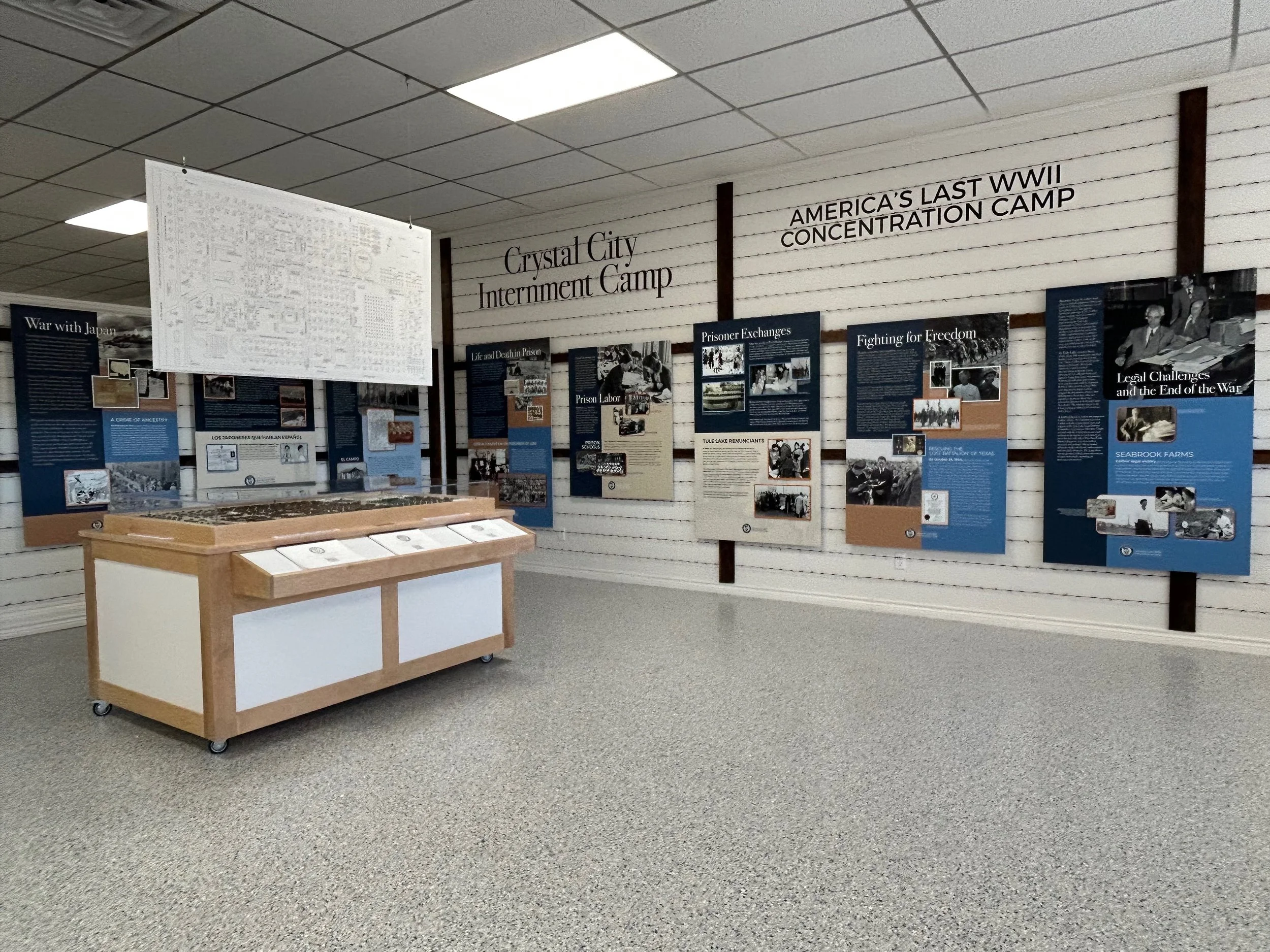
Original exhibit at My Story Museum in Crystal City
About the Exhibit
During World War II the United States government imprisoned over 125,000 people of Japanese ancestry. Most were US citizens. An additional 11,000 individuals of German descent and over 3,000 of Italian descent were also interned. Men, women, and children were stripped of their rights and forced into America’s concentration camps for an average length of 3.5 years.
Crystal City Family Internment Camp is unique in the larger context of these events. Operating from 1942-1948, this Department of Justice site was established to detain non-citizens held under the Alien Enemies Act of 1798 and to reunite families separated across multiple detention sites. By the time they arrived in Crystal City, most were bound for repatriation to Japan, Germany, or Italy. Many would be traded in prisoner-of-war (POW) exchanges to retrieve US civilians trapped behind enemy lines when the war began. This site was also used to imprison Latin Americans of Japanese, German, and Italian heritage, who were kidnapped from Central and South America. Most were forcibly deported or exchanged to Axis countries, while others navigated the immigration courts and eventually won their right to remain in the US.
This exhibit examines topics related to daily life within the Crystal City internment camp. Through individual family narratives, it explores the complex journeys of Japanese American, German American, and Latin American internees before and after the war. At its core, the exhibit raises important questions about citizenship, ethnicity, and belonging during a time of conflict.
Produced by Crystal City Pilgrimage Committee, the exhibit was funded by Henri and Tomoye Takahashi Charitable Foundation, Japanese American Confinement Sites Grant Program of the National Park Service, Japanese American Community Foundation, and the Gerbode Foundation.
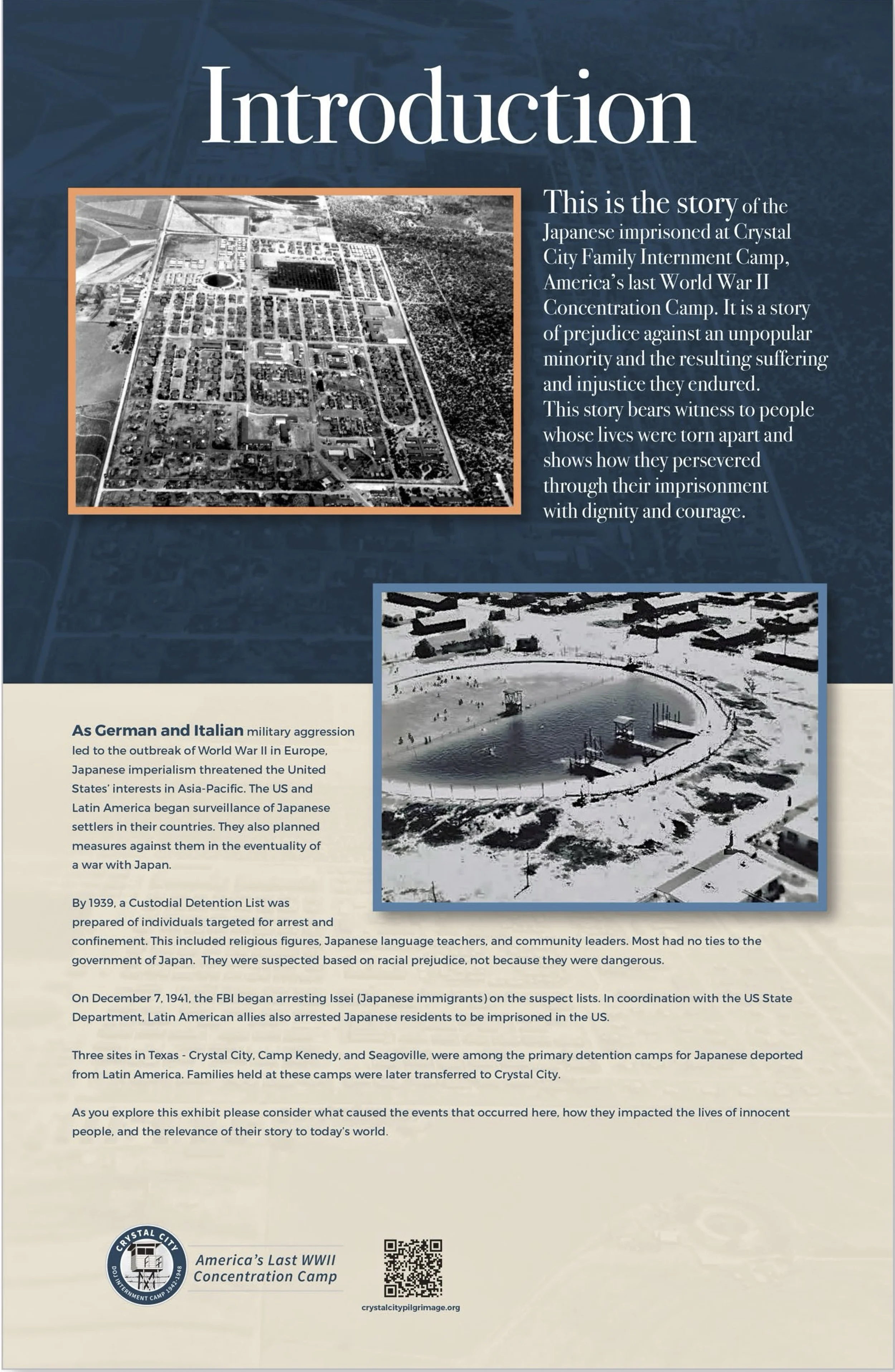
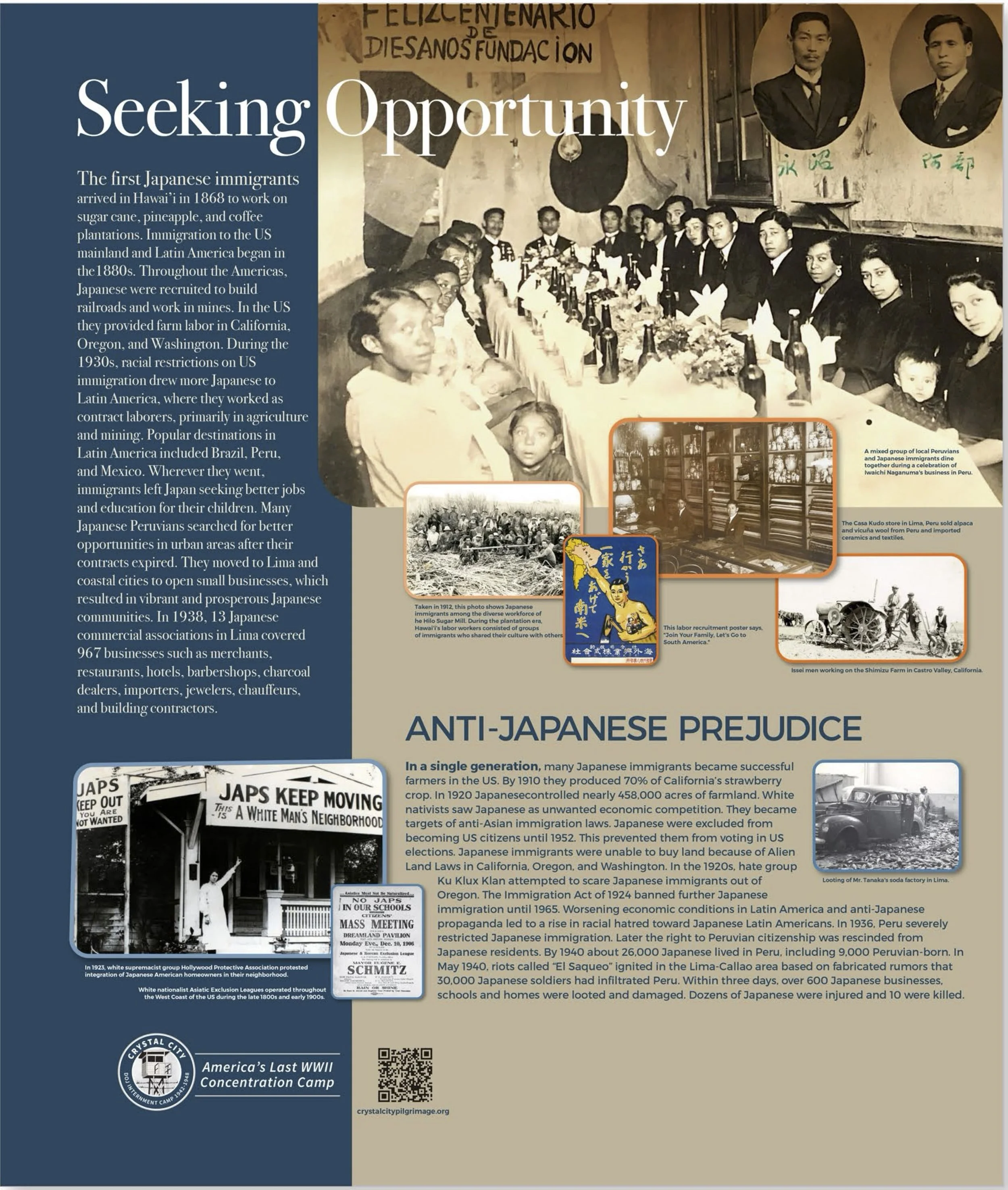
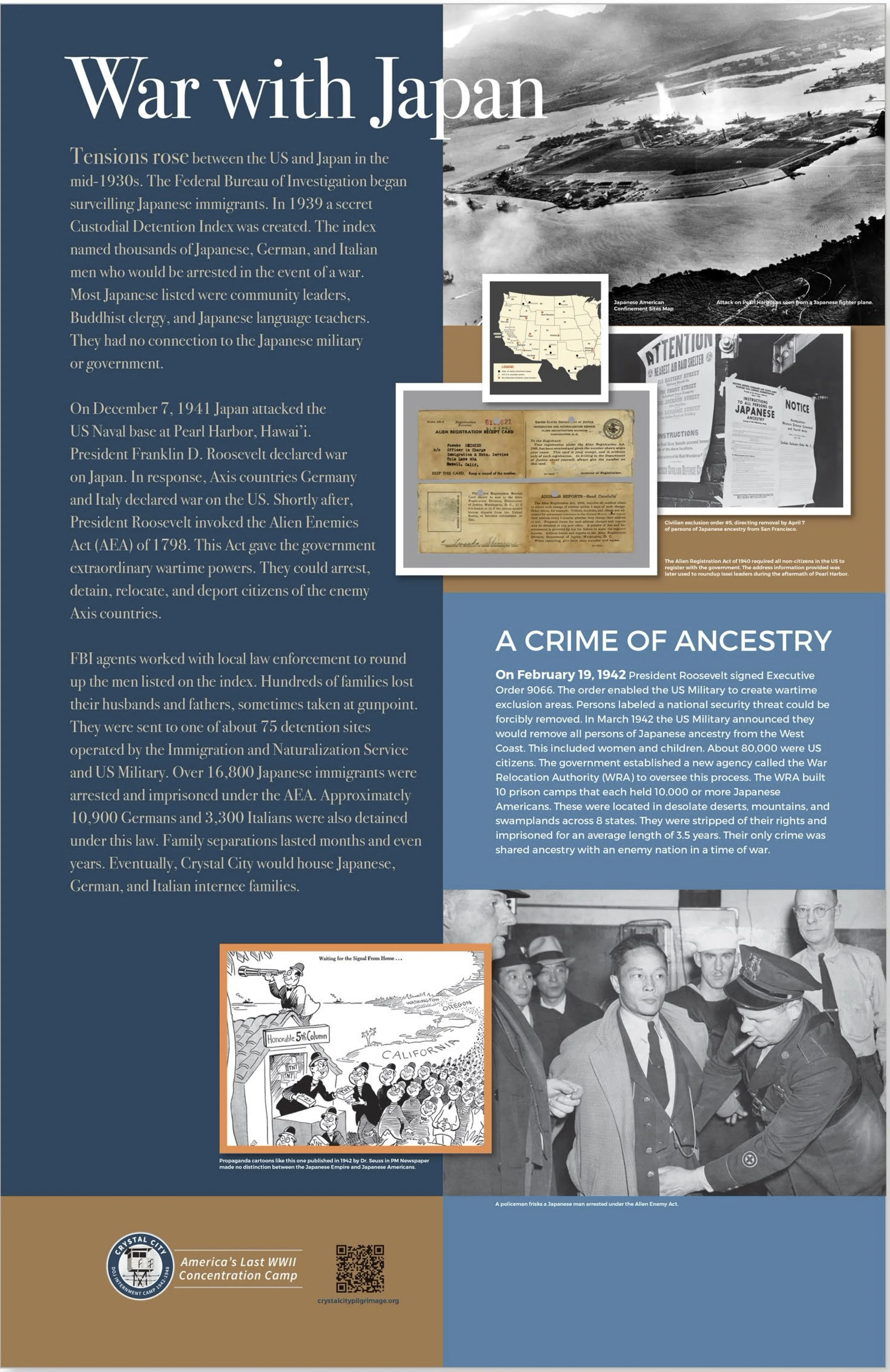
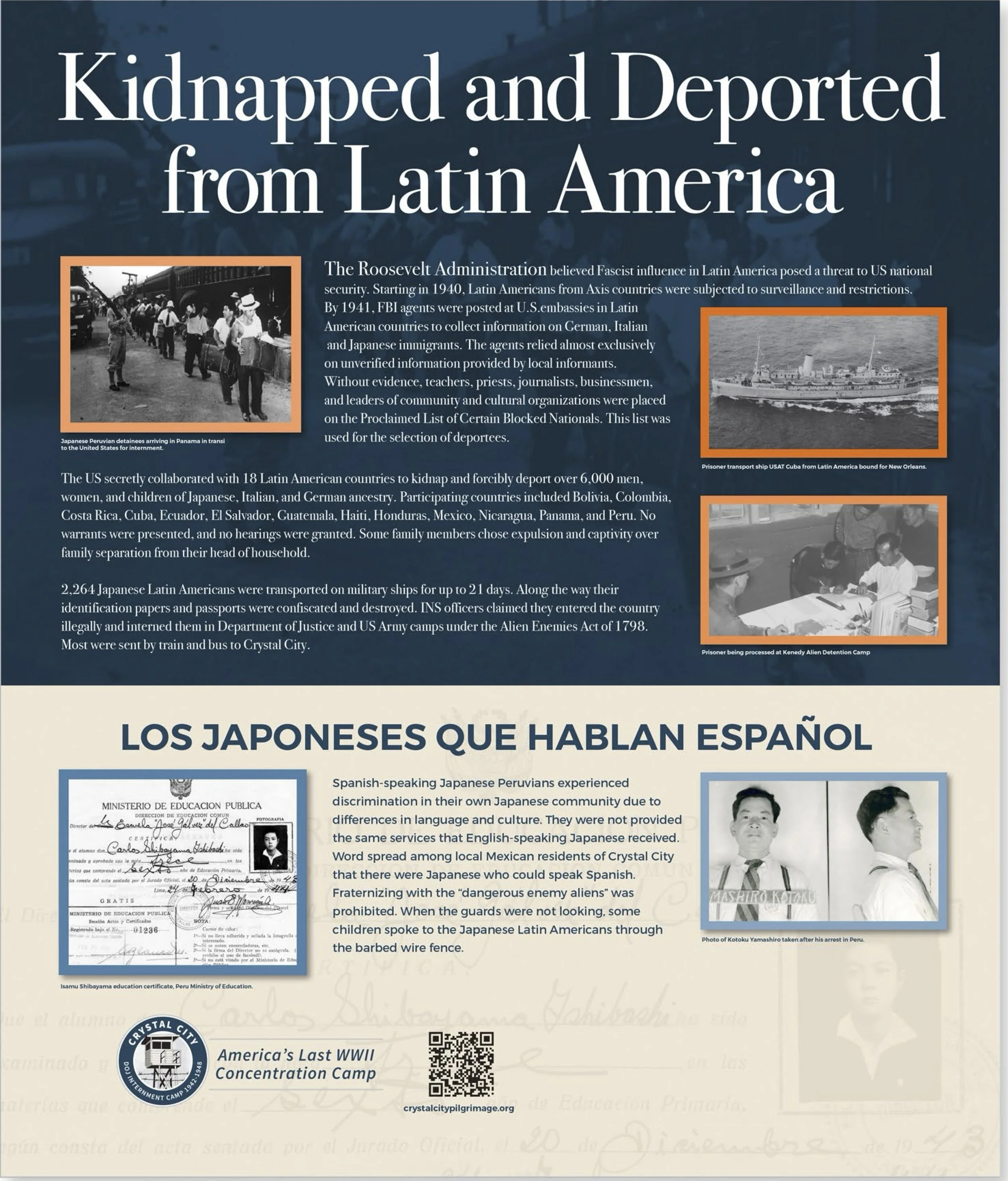
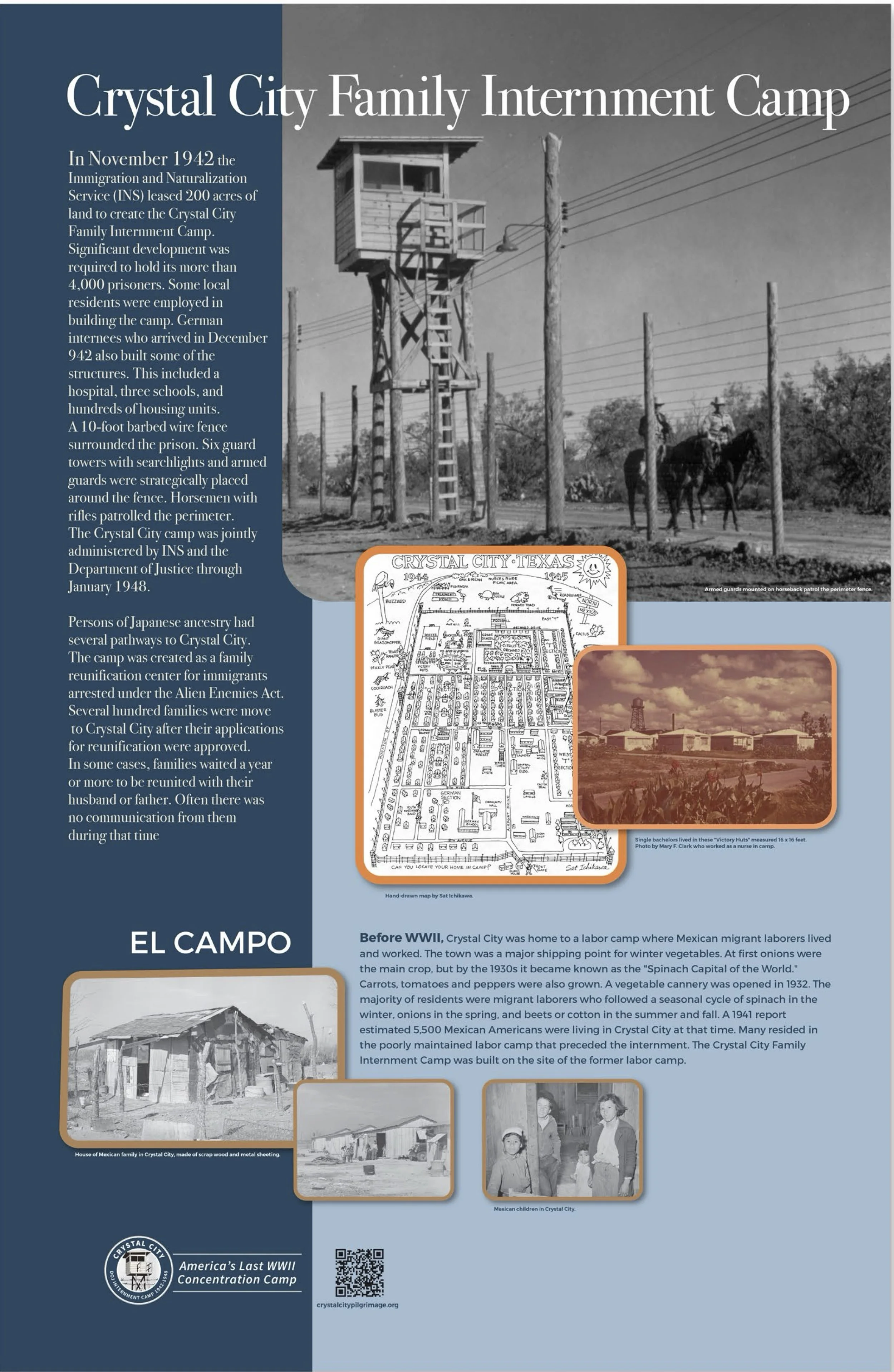
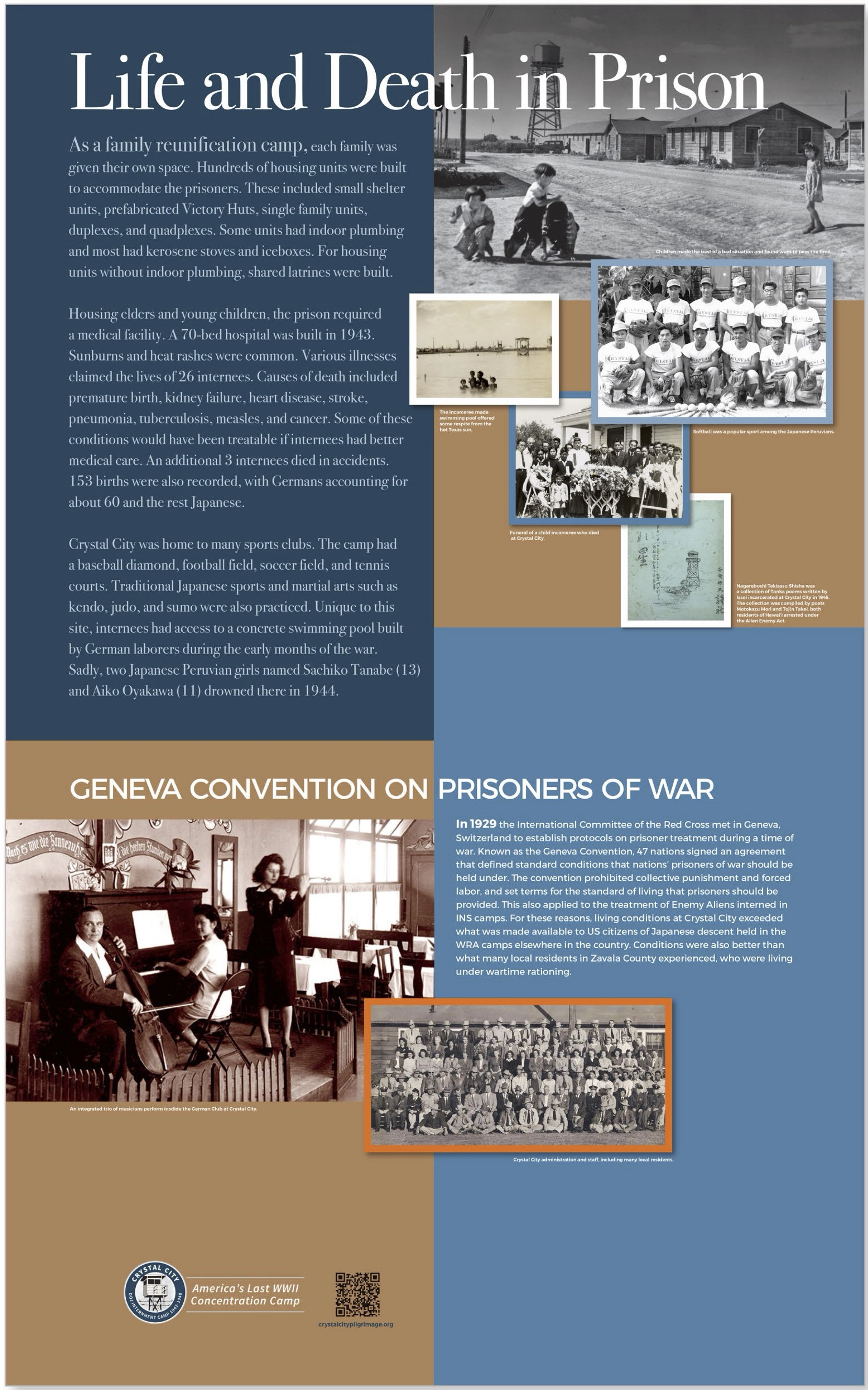
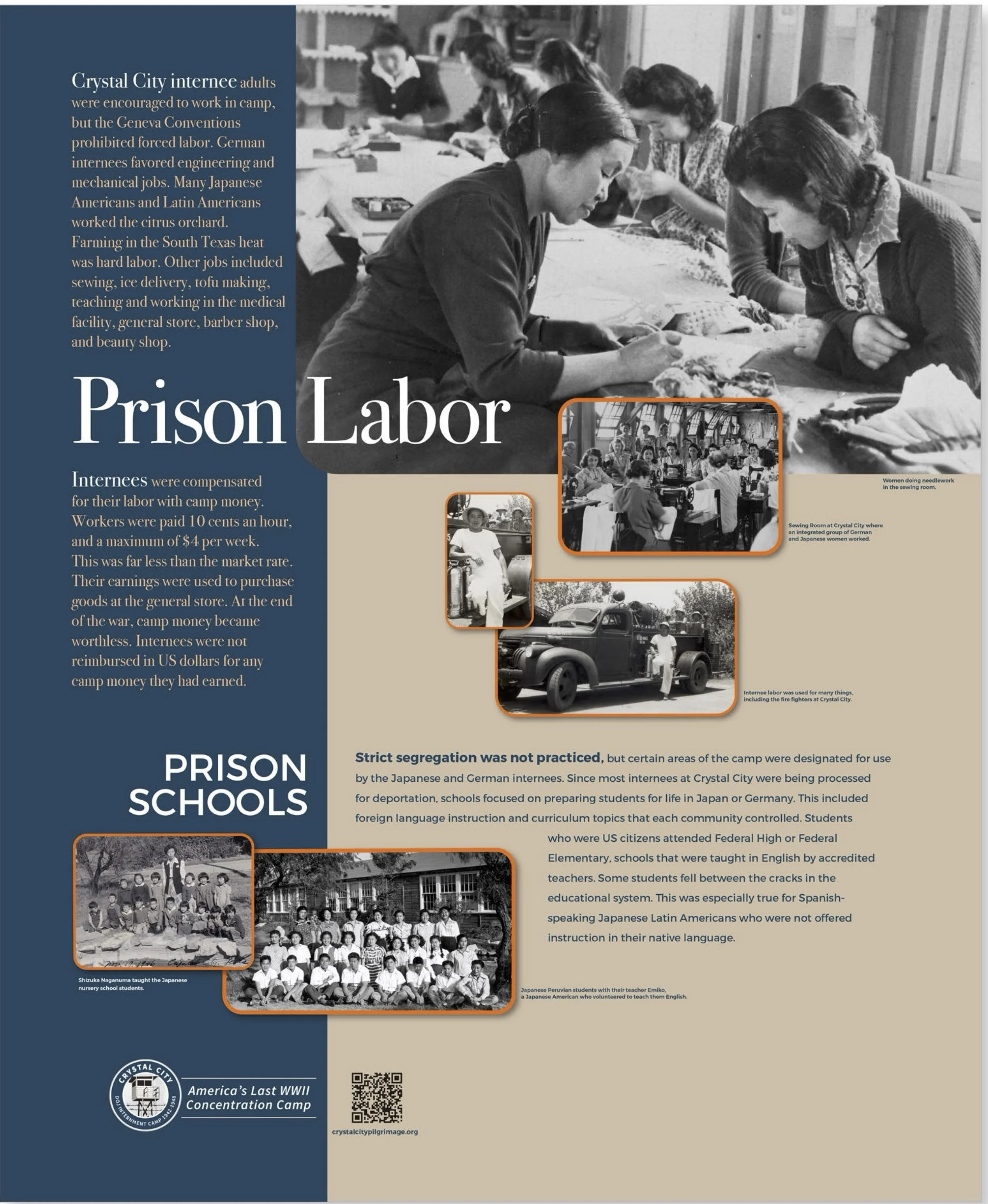
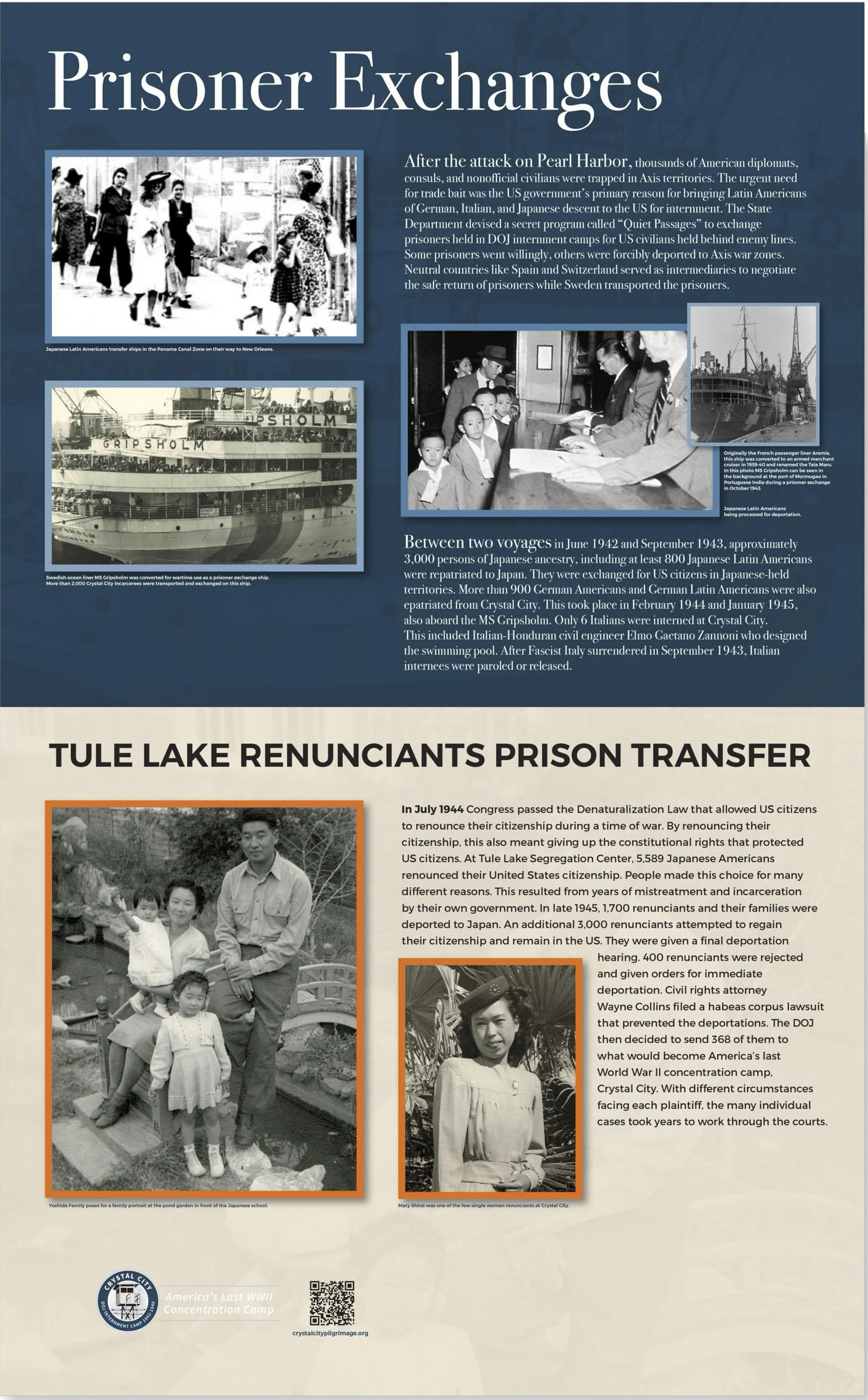
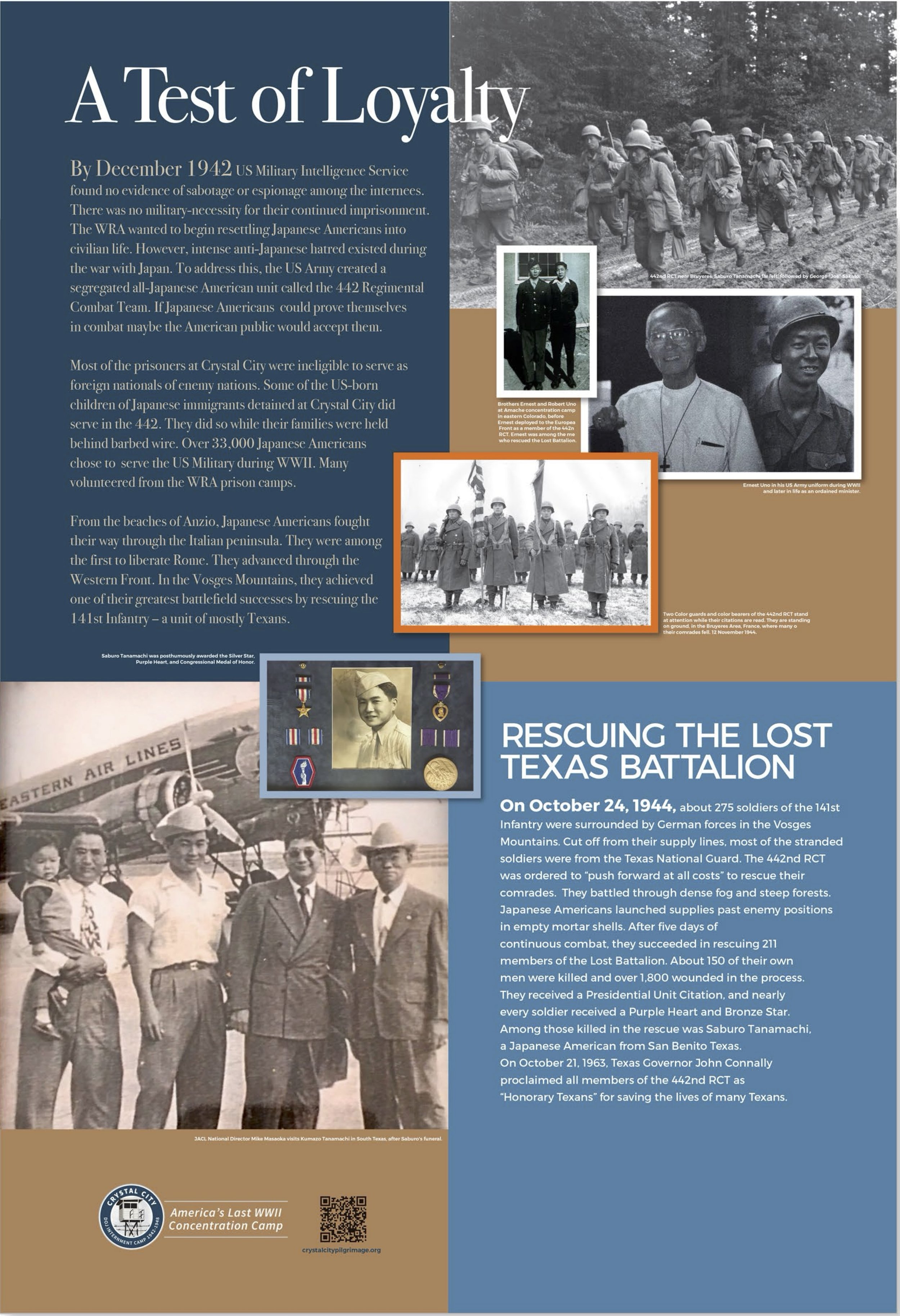
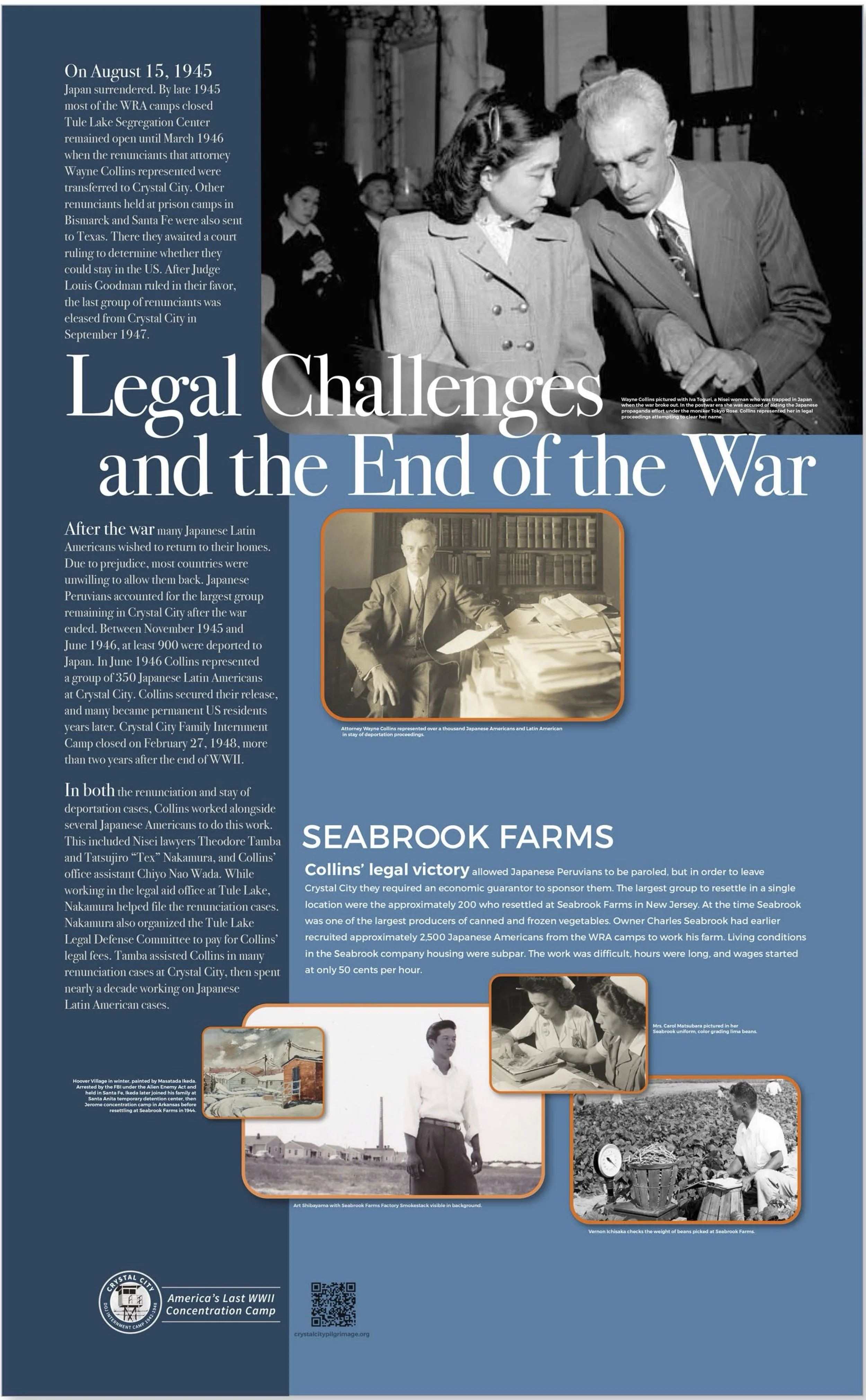
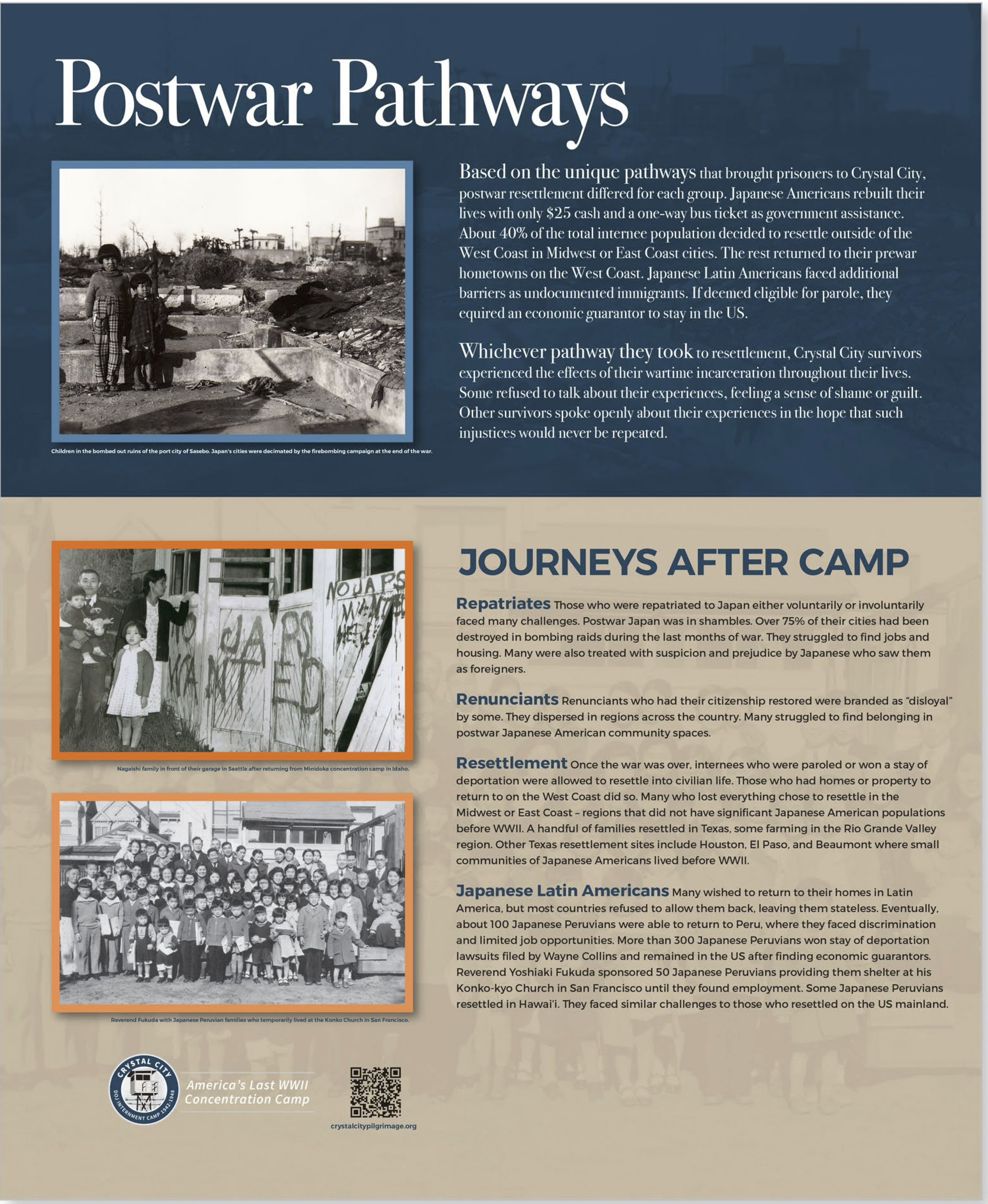
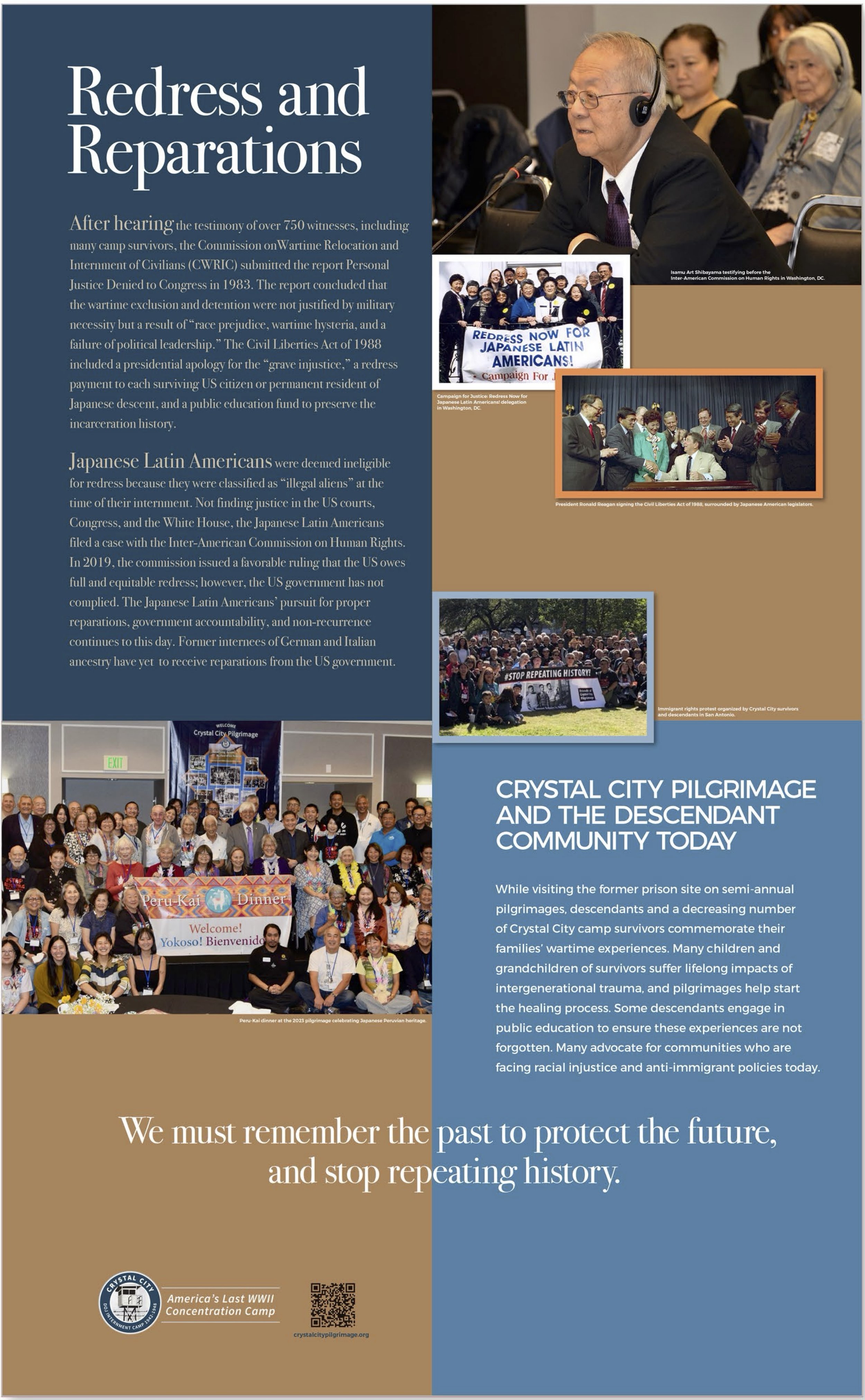
As a supplement to the core exhibit narrative that centers on the historical events and socio-political conditions that led to specific legislation being enacted, a second section explores the stories of individual families. By exploring how the forced removal and wartime incarceration resulted in life-changing impacts that extended far beyond the war, this section of the exhibit further humanizes the experiences of these individuals, making the history more relatable to audiences of all ages and backgrounds.